Forest Management

A forest is a long term asset, and its value increases when work is planned and executed sequentially. Forest management, as understood by Palus, is targeted administration:

  • clear goals
  • organized data
  • an understandable work sequence
  • responsibility for the result.

This specific method reduces risks and allows the forest property to work for your benefit over the long term.

Well organized management relies on scientific research, provable facts, and documentation rather than assumptions. The quality of forest management is determined by how accurately information is gathered and how disciplined the execution of the forest management tasks remains. To promote the full potential of the forest, we tie decisions to specific deadlines, precise costs, and clear result criteria, which ensures regular monitoring.

Long term forest management is successful when work is documented and critically evaluated to make the correct subsequent decisions. In practice, this operates as a management cycle where data comes first, followed by a decision regarding necessary work, then the execution of that work, and finally an evaluation of the result. This workflow allows owners to notice problems early and take action before fixing them becomes an expensive necessity. 

Our method is highly understandable for forest owners who want to clearly see the next steps and avoid unexpected expenses. This workflow is also highly convenient for forest owners who only participate in forestry on an irregular basis.

Palus provides management services for properties across the entire territory of Latvia. During work planning, we orient ourselves entirely around the forest management goals set by the forest owner. When organizing forest management tasks, we cooperate with neighboring property owners and road owners, including municipalities, Latvian State Roads, and Latvian State Forests, to maintain unified quality control.
Forest Inventory

This represents the first step for a forest owner to acquire the data needed as a foundation for making decisions in forest management. Information is gathered and compiled regarding stand composition, age, quality, and health condition, alongside clarifying the exact tree count within the compartments. The acquired data helps owners understand the condition of the forest stands and the forest growing conditions to prepare a justified sequence of work for the coming years.

If updates or approvals are necessary, the documentation can also be formalized with the State Forest Service. It remains essential to observe all necessary regulations during this stage because they dictate the volume and types of data as well as the entire set of future activities.

Boundary Settlement

Settling boundaries is a practical security issue that protects owners from misunderstandings and disputes. Precisely marked boundaries allow owners to safely plan work in the forest, machinery movement, log landings, and access roads, as well as link specific tasks to specific compartments. This improves the overall work process and significantly reduces the risk of errors.

Settled boundaries are crucial for cooperation with service providers and for long term property management because every change in the forest becomes traceable and provable.

 Forest Planting

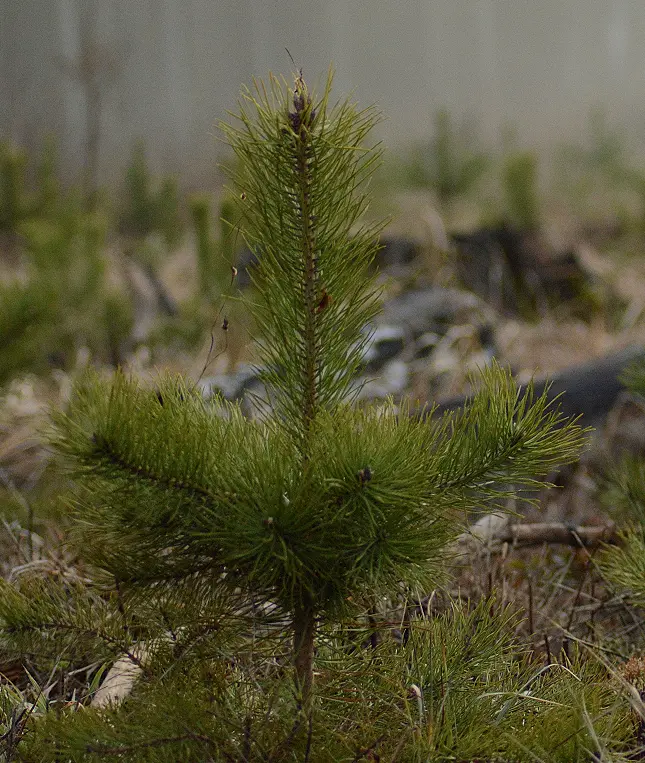
Following timber harvesting and soil preparation, forest regeneration work must start on time to ensure the forest growing potential is not lost. Forest regeneration is planned so that the planting material perfectly matches the soil type, the moisture regime, and the intended goal for the stand. Special attention goes toward the preparation of the forest land soil and the quality of the work itself, because mistakes made during the preparation phase most frequently lead to expensive consequences later.

Recommendations from the forest science institute Silava, which are based on scientific studies, prove highly useful during this phase, alongside the practical experience and recommendations from Latvian State Forests regarding the most suitable species for specific locations. A job started correctly eases all subsequent steps and creates a solid foundation for stable forest regeneration.

Forest Maintenance and Protection

Stand development requires a clear work schedule and consistent execution of that schedule. Forest maintenance involves freeing the trees from competing vegetation, while forest thinning helps form a high quality stock and improves the stability of the stand. Forest protection is planned in parallel to safeguard the young stand against damage caused by wild animals. This activity includes plant protection measures, specifically treating seedlings with repellents that deter forest animals. Seedling treatment is performed in strict accordance with rules that dictate allowable methods and safety requirements.

A sustainable method to forest management means ensuring risk management, economic gain, and the preservation of natural values are balanced rather than opposed.

When the stand reaches appropriate maturity, timber harvesting allows the owner to extract wood at the exact moment it provides the best economic effect. Following the harvest, the territory is prepared for forest regeneration. To ensure the highest quality, we coordinate the exact sequence of works and perform forest maintenance after the initial tasks are completed.

European Union Funding

Attracting European Union funding proves useful if the forest owner wishes to accelerate work or implement a more extensive project. This typically requires a management plan featuring a clear list of tasks, detailed cost calculations, exact deadlines, and provable document tracking. Palus helps organize the justifications and evidence so that all requirements are met even during official inspections.

To keep documentation logical and traceable, we always organize the management plan so that it clearly displays the sequence of tasks, specific responsibilities, and the expected result. Because program conditions tend to vary, we closely follow the set Latvian national guidelines and deadlines to ensure all documents are correct.

Why is it necessary to manage a forest?

Because without active management, a forest develops unevenly and the risks of forest damage increase significantly. Forest management helps prevent existing damage early, plan financial investments, and preserve the total value of the property. Data driven decisions are completely understandable and justified.

What are the main risks if a forest is not managed?

The main risks include pests, diseases, windthrows, and the probability of fires, alongside a significant drop in the overall quality of the stand itself. If management tasks in the forest are not executed, costs caused by accidents frequently increase, and the ability to choose the optimal course of action decreases, making the work more expensive and less predictable.

Forest management becomes vastly simpler when there is a clear work plan and scheduled deadlines.

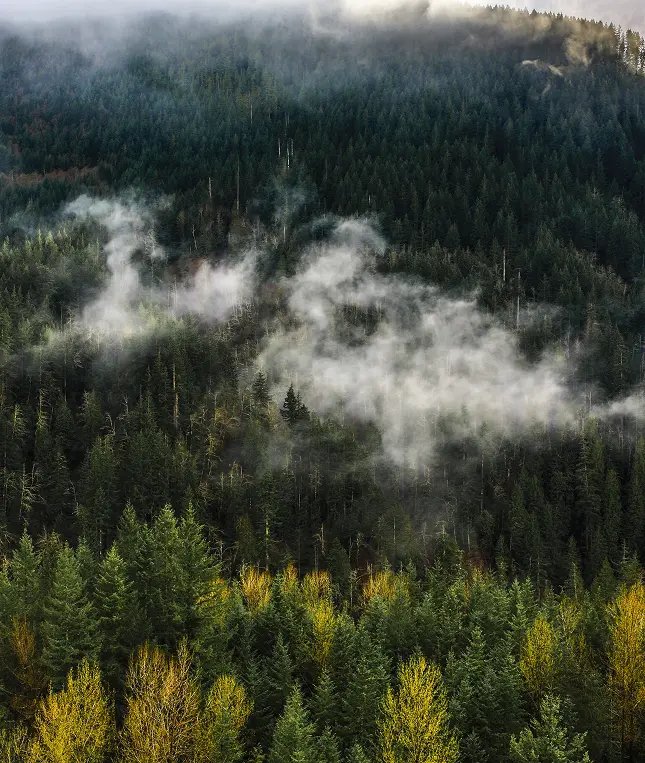
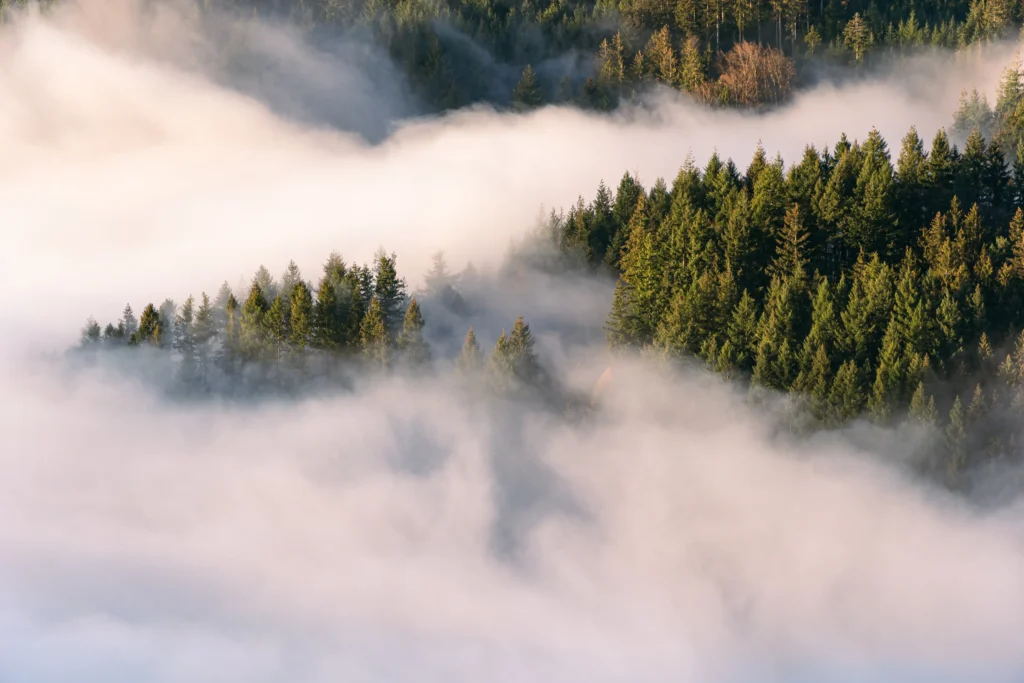
Meža skats no putna lidojuma, biezas miglas laikā.