Forest Planting and Land Afforestation

Professional Forest Regeneration and Sustainable Forestry

A forest is a long-term investment that requires professional work and careful planning. Under the climate conditions of Latvia, forest planting is a complex process that involves both scientific methods and practical experience. Our team provides all forest planting services, starting from territory preparation to young stand maintenance, guaranteeing maximum seedling survival and sustainable forest development. 

The Latvian state has set specific requirements for the forest regeneration process, and we ensure complete compliance with all regulatory acts. The quality of the planting work determines the stand productivity throughout its development period. Our specialists use tested methods and technologies to guarantee a high seedling survival rate. 

The best time for forest planting in Latvia is the spring period from April to mid-May, when the soil is sufficiently moist and the temperature favors young tree seedlings. Autumn planting is also possible, especially for coniferous trees, but it requires careful attention to meteorological conditions. The changing climatic conditions in Latvia require flexibility in planting schedules. Utilizing containerized seedlings makes it possible to extend the planting period and ensure better growth quality.

Our Specialized Services

Forest Regeneration After Harvesting

We ensure quality forest regeneration in clearcuts by selecting the most suitable tree species according to the growing conditions, forest type, and landowner objectives. The process includes soil preparation, the selection of high-quality bred seedlings, and the execution of planting works. During the forest regeneration process, it is important to observe biological diversity and ecosystem balance. State forests are regenerated according to strict standards, and we highly recommend private forest owners to plant using similar principles.

By choosing selectively bred seedlings, it is possible to ensure larger annual tree growth and better timber quality, thereby accelerating the opportunity to generate revenue from the forest stand. Tree seedlings are selected by evaluating the soil type, forest type, moisture regime, and light conditions in the specific area.

The required works in the forest include soil preparation, the planting itself, and subsequent maintenance. Specific tree species, a defined number of seedlings per hectare, and a set planting density apply to each forest type. Pine, spruce, birch, and black alder are the most frequently planted species under Latvian conditions. Combining different tree species in one area promotes biological diversity and reduces the risk of disease spread.


Afforestation of Agricultural Lands

We turn unused agricultural lands into productive forests, providing landowners with an alternative income source. We evaluate the soil to determine the most suitable tree species for each specific area. We develop an afforestation plan and provide all the necessary documentation to receive European Union support payments. The Latvian state offers substantial financial support for the afforestation of agricultural lands. The process includes project development, coordination with the Rural Support Service, and quality planting according to the project conditions.

When afforesting agricultural lands, special attention must be paid to soil preparation because it is often thicker and more compact compared to forest soils. Specific soil preparation methods are used to improve the water and air regime. The first years after afforestation are critical, therefore we ensure regular surveying and maintenance. Afforested agricultural lands can be registered for carbon credits.

This is a new opportunity, and Palus, in cooperation with EcoBase, offers clients the chance to submit their afforested agricultural lands for a carbon credit project.


Plantation Forests

When afforesting agricultural lands, the owner has the opportunity to register the stand as a plantation according to regulatory acts. A plantation forest has the following advantages:

  • A lower minimum number of trees compared to a regular forest stand.
  • The owner may harvest the timber at any age at their own discretion.
  • Plantation forests can also be registered for carbon credit projects.
  • Deforestation compensation is not required if the land use changes. 

The owner can choose traditional species such as birch, black alder, spruce, and pine. It is also possible to select hybrid aspen and poplar suitable for woodchip production, fast growing clonal birch seedlings intended for birch veneer log production starting from 30 years of age, or sweet cherries suitable for producing high value timber.

By planting traditional forest tree species, there is an option to choose whether to harvest pulpwood at 20 to 25 years of age or veneer logs at 40 to 50 years of age. We provide all services from planting planning to timber harvesting, helping to evaluate the right harvesting time based on timber prices and owner needs.

Plantation forests provide an opportunity to ensure maximum economic return already at 15 to 25 years of age. By planting fast growing species, it is possible to reach a timber increment of up to 15 m3 per year from one hectare under favorable growing conditions.

The quality of tree seedlings in such plantations is particularly important. Plantation forests require more intensive management and regular maintenance. The climate in Latvia is suitable for growing several fast-growing species, especially hybrid aspen and grey alder.
The Forest Planting Process Step by Step

Territory Assessment and Planning

A forest management plan is the basis for rational, well considered, economically justified, and sustainable forest management. A forest regeneration or afforestation project is an integral part of the management plan, but it can also be prepared separately by evaluating economic and ecological factors.

We conduct a detailed territory study, determining the forest type on forest lands, the soil type and properties on agricultural lands, and the most suitable tree species. Different regions in Latvia have varying climatic and growing conditions that require an individual evaluation.

During the planning process, we analyze historical information about the specific territory, including the composition and productivity of the previous stand. Experience shows that careful planning ensures more than 20% higher productivity. The selection of tree species is based on scientifically grounded criteria.

We also take into account climate change forecasts and choose tree species that will be resilient to expected changes. For forest regeneration, we use selectively bred seedlings that ensure better growth and resilience. We also include biological diversity preservation measures in the work planning.


Soil Preparation

We perform soil preparation according to the chosen methodology, providing favorable conditions for seedlings to take root. We use specific machinery and tested methods that reduce soil erosion risks. Under Latvian conditions, mound or furrow preparation is most commonly used.

The intensity of soil preparation depends on specific conditions, such as the moisture regime, soil type, and the selected tree species. Preparation works in the forest may also include stump extraction or milling if this is necessary for quality planting.

Correct soil preparation increases seedling survival by 15-20%. It is important to observe the correct time between soil preparation and planting, which is usually 2 to 3 weeks in the spring. During this time, the soil stabilizes and favorable conditions for root system development are formed. Forest regeneration requires careful planning of all work stages.


Seedling Selection and Quality

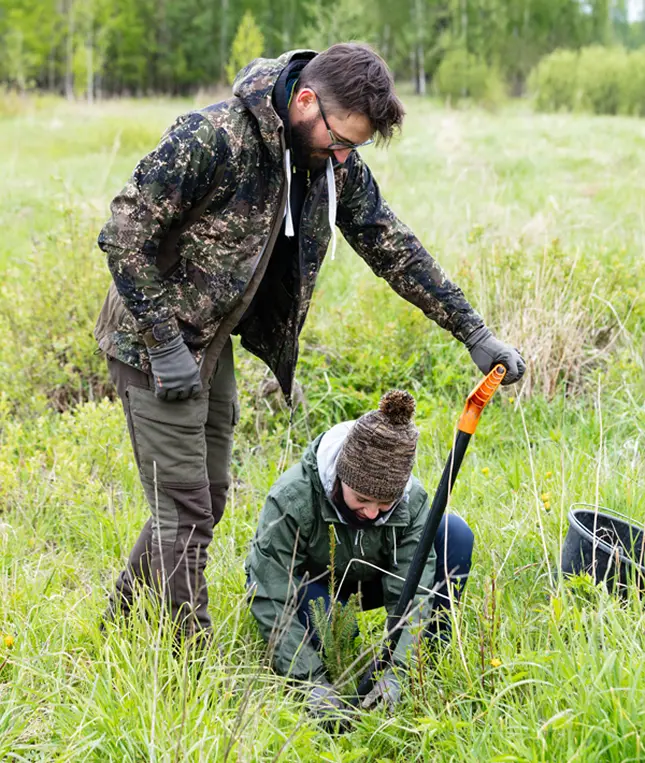
We use only certified, high quality, selectively bred seedlings from reliable tree nurseries. We choose tree seedlings according to specific growing conditions and the planned management goal.

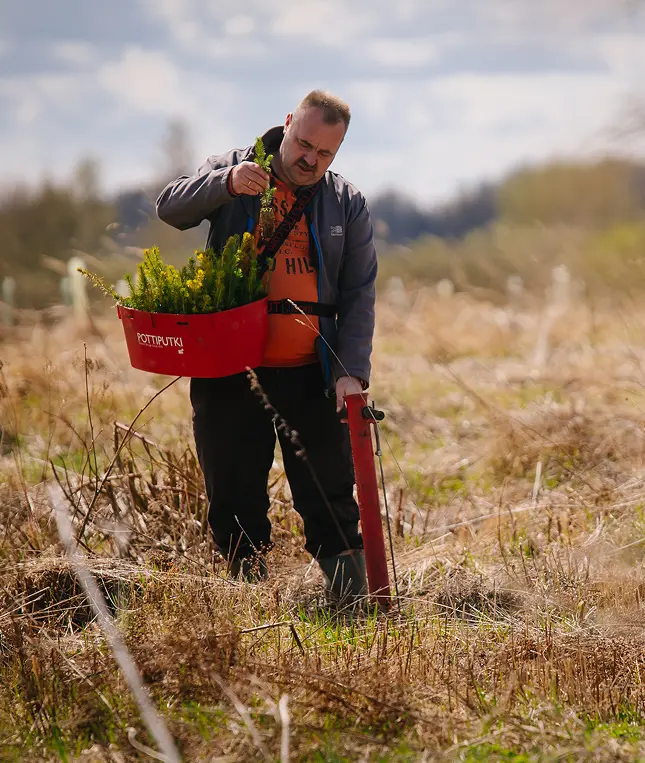
Seedlings grown in Latvian tree nurseries meet high quality standards. Planting works are carried out by experienced specialists, observing the correct planting distances and technologies. Each tree species has a specific minimum number of seedlings per hectare and its own specific planting conditions depending on the soil preparation method. For example, if the soil in the area is prepared using the mound method, the seedling must be planted according to specific guidelines (see image).

Quality control takes place at all stages, starting with the receipt of seedlings until the completion of the planting works. The origin of tree seeds and seedlings is documented, ensuring traceability. The State Forest Service regularly inspects the planting quality and compliance with regulations.

Young Stand Maintenance and Protection

We offer a young stand maintenance program in the first years after planting, ensuring maximum seedling survival and quality growth. The first three years after planting a forest are critically important for establishing a young stand. Regular maintenance during this period ensures a healthy and productive forest stand.

Maintenance works include limiting competing vegetation, adding new seedlings if necessary, and providing protection against animal damage. A regenerated forest requires protection against cervids, which can seriously damage young plantings.

Individual protection products and repellents are widely used in Latvia. Agrotechnical maintenance measures in the first years include grass mowing around the seedlings and weed limitation. It is necessary to plant additional trees if the survival rate is lower than 80%. Timely maintenance reduces the total long term forest regeneration costs.

Economic Aspects and State Support

Professional forest planting ensures up to 95% seedling survival, compared to 60-70% for works done by owners themselves. A properly planted and timely maintained forest starts yielding economic returns faster and ensures higher timber quality in the future.

Such a forest reaches maturity already at 40-60 years of age, depending on the chosen tree species. Our specialists know the state support programs for forest owners and help prepare the necessary documentation to attract financing.

The Latvian state offers several types of support for forest regeneration, young stand maintenance, and forest infrastructure development. In recent years, the available funding for the forestry sector has increased by up to 15%.

Total forest management costs can be significantly reduced by using state and European Union support programs. We provide consultations on sustainable forest management and certification opportunities. Certification ensures a higher timber selling price and access to international markets. We maintain a PEFC group certificate that we offer to our clients.

Environmental and Climate Benefits

Each planted hectare is an investment not only in economic value but also in environmental quality and achieving climate goals. The forest serves as a carbon dioxide sink, a biological diversity provider, and a recreational resource for future generations.

One hectare of young forest sequesters 4-8 tons of carbon dioxide annually, depending on the tree species and growing conditions. Forest planting is a significant climate change mitigation instrument that gives the owner an opportunity to participate in a carbon sequestration project and potentially gain economic benefits from carbon sequestration in the future.

The forest also provides ecosystem services, such as water quality improvement, soil protection against erosion, and microclimate regulation. Increasing attention is paid to climate friendly forestry methods. Many Latvian companies invest in forest planting, seeing it as a part of their corporate responsibility strategy.

Experience and Professionalism

Our team has more than 15 years of experience in forest planting and thousands of hectares of regenerated forests. We regularly update our knowledge by following the newest trends in forestry and climate adaptation strategies. We use only tested and effective methods in our work.

We cooperate with the leading Latvian forest science institute Silava and tree nurseries. High seedling survival rates and client reviews confirm our work quality. The forest planting process is documented and controlled at all stages.

Future Perspectives

The Latvian forestry sector develops by taking into account global trends and local characteristics. Increasing attention is paid to the value of forest ecosystem services and carbon sequestration potential. An increase in demand for professional forest regeneration services is expected in the future.

In the context of climate change, approaches to forest management are also changing. More attention is paid to creating mixed stands and using climate resilient species. Latvian forests are a significant national resource whose value will continue to increase.

Contact us to receive a detailed consultation and a customized offer. Together we will create a sustainable and productive forest that will serve for generations. Our goal is to provide quality forest regeneration that meets high standards and client needs.

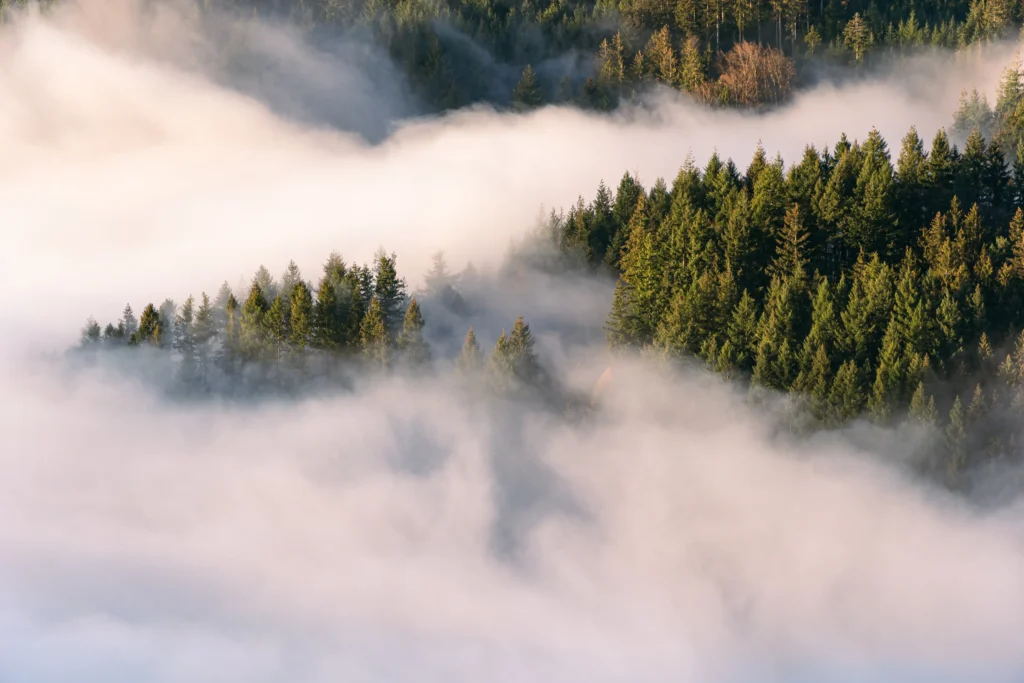
Meža skats no putna lidojuma, biezas miglas laikā.